

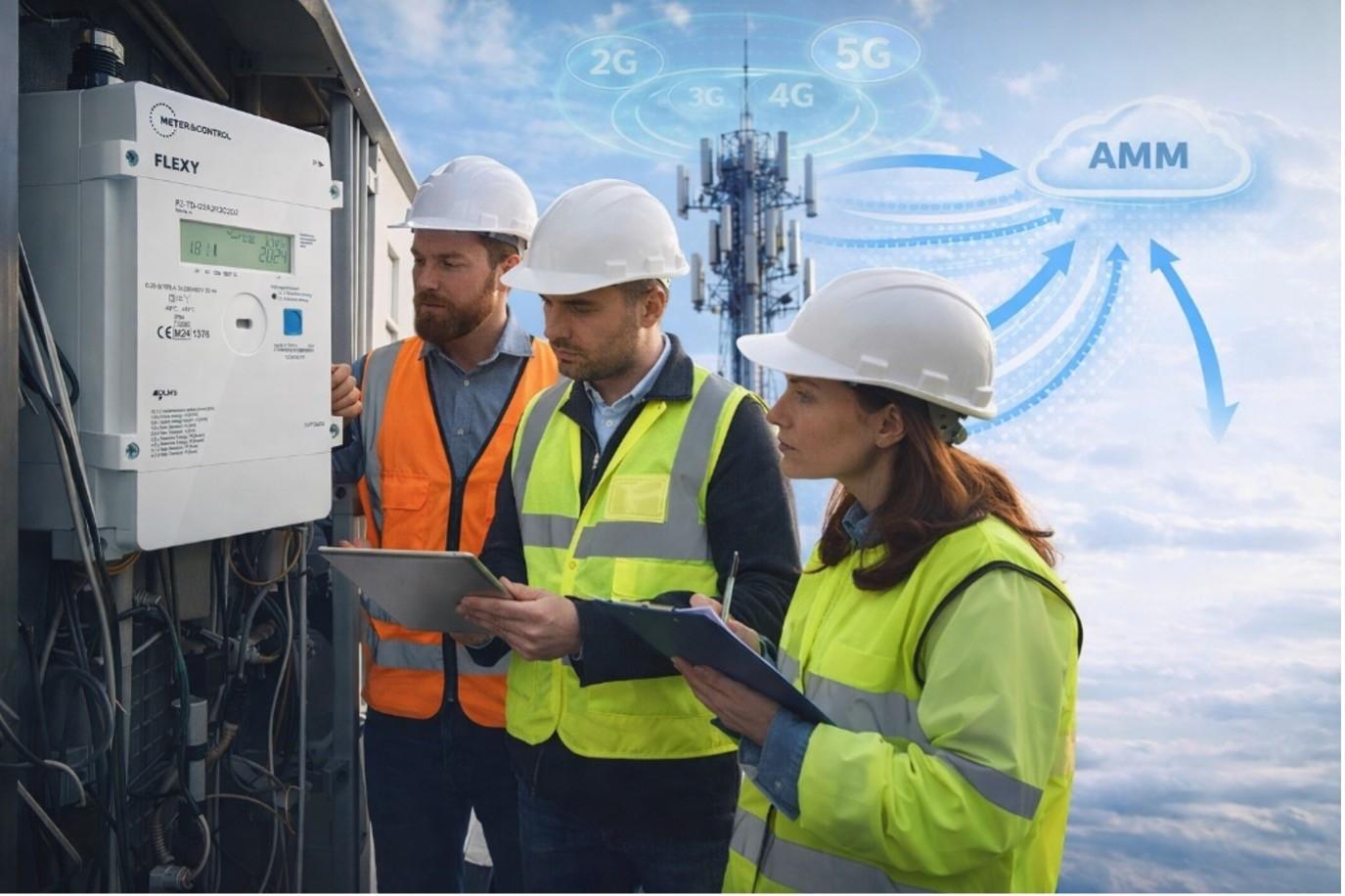
The digital transformation of the energy sector is accelerating, and smart metering has become a foundational component of modern power distribution systems. While communication technologies such as 2G, 3G, LTE, NB-IoT, and LTE-M are well standardised, real-world deployments reveal a more complex picture.
Experience across multiple countries shows that the biggest challenges in smart metering are rarely about the technologies themselves, but about how those technologies behave in real telecom environments.
The Evolution is Clear, but Reality is Not
Smart metering communication has evolved from legacy 2G and 3G networks toward LTE-based and LPWAN technologies such as NB-IoT and LTE-M. These technologies are specifically optimised for IoT, enabling better coverage, deep indoor penetration, lower power consumption, and scalability.
Looking ahead, the industry is entering the next phase with 5G technologies. In particular, 5G RedCap (Reduced Capability) and its evolution, eRedCap (expected in upcoming 3GPP releases), are emerging as key enablers for future smart metering and large-scale IoT deployments. These technologies aim to bridge the gap between high-performance 5G devices and low-complexity IoT endpoints by reducing device complexity, cost, and power consumption while maintaining the benefits of 5G networks.
However, if integration challenges remain unresolved, even these next-generation technologies will inherit the same deployment risks.
In practice, implementation depends on:
• operator-specific configurations
• infrastructure differences
• regulatory environments
• device and SIM provisioning
Even globally standardised technologies behave differently depending on the network context.
Four Lessons Learned from Real Deployments
Based on multiple large-scale deployments, four recurring challenges stand out:
1. Same country, different operator, different reality
Even under identical regulations, mobile operators can have completely different validation procedures.
In one case, integration was smooth, took one month with Operator A, while Operator B required six months of extensive testing, including simulations of network changes and long-term stability checks.
Takeaway: certification complexity is operator-driven, not regulation-driven.
2. New technology, immature ecosystem
Introducing a new communication technology often exposes inconsistencies between network equipment vendors.
In practice:
• one base station vendor required no changes
• another required modem optimisation
• a third required months of joint debugging with chipset manufacturers
Takeaway: standard does not guarantee uniform behaviour.
3. The hidden risk of SIM configuration
A seemingly simple assumption, static IP availability, caused weeks of delays.
Despite operator confirmation, SIM cards were incorrectly configured, preventing communication with the Head-End System.
Only after deep diagnostics was the issue identified and resolved.
Takeaway: never assume, always verify.
4. Multi-technology SIM, single point of failure
In another deployment, meters connected to the strongest network, but that network was contractually restricted.
Result:
• device appeared online
• no data was transmitted
The fix required locking devices to the permitted network.
Takeaway: signal strength does not equal service availability.
Technology vs integration: the real gap
The key takeaway is clear: The primary challenges are not technological, but related to integration.
Reliable communication depends on alignment between:
• meter firmware logic
• communication module firmware logic
• SIM capabilities
• operator policies
• network infrastructure
Without this alignment, even the most advanced communication technology can fail in practice.
What This Means for the Industry
Successful smart metering deployments require:
• early identification of communication risks
• rigorous testing and validation procedures
• flexible device configuration
• close collaboration between utilities, vendors, and telecom operators
Looking ahead, 5G RedCap and eRedCap will play an important role in future smart metering architectures. However, their success will depend not only on technical capabilities, but on how effectively they are integrated into real operator environments.
In practice, preparation is the critical differentiator. Before any meters are deployed in the field, our experts work closely with utilities to collect communication traces, perform detailed analysis, and validate behaviour across different network scenarios. This process is conducted both internally and in collaboration with modem and chipset providers, ensuring full alignment of all components.
Preparation is not optional. It is the difference between a successful rollout and months of troubleshooting.
Final thought
Smart metering communication is no longer just about choosing between 2G, 3G, LTE, NB-IoT, or LTE-M.
It is about understanding how these technologies behave in real-world conditions. And in that reality, collaboration matters more than specification.
If you are planning a smart metering rollout or facing communication challenges, our team is actively working with utilities and telecom operators to solve exactly these problems.
Let’s move from theory to reliable deployment.
—
Find out more about Meter&Control.
—
Disclaimer: This is a blog space for debate where ESMIG members share their thought leadership. All opinions expressed are the author’s. The content of this article is not an official position paper endorsed by the association.